
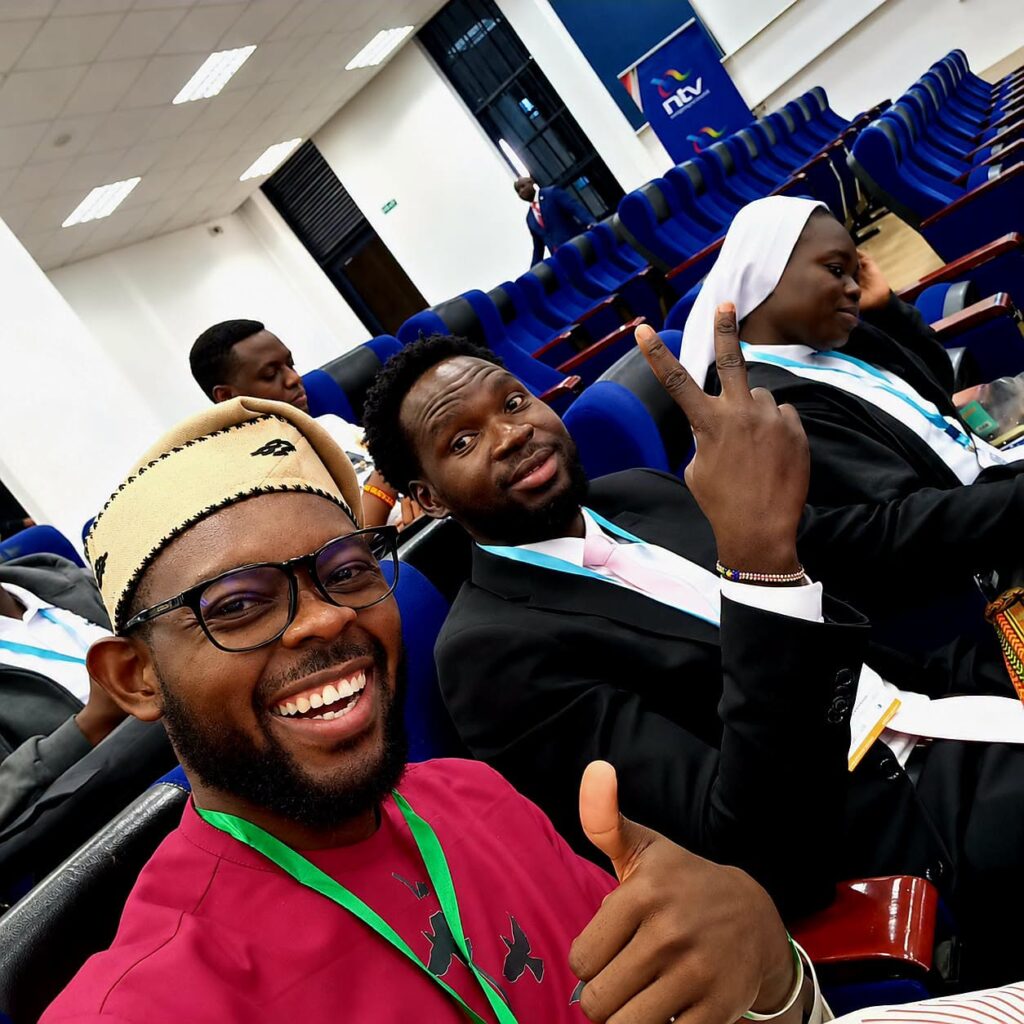
Precious Ogamode Best, a Second-Year Theology student at Hekima University College, was among ten student representatives who participated in the three-day conference reflecting on the political legacy, communication style and democratic contribution of the late former Kenyan Prime Minister.
Hekima University College was represented at the Raila Amolo Odinga (RAO) 2026 Memorial Conference held at Daystar University, Valley Road Campus, Nairobi, from 7 to 9 October 2026. The conference, held in honour of the late Kenyan politician and former Prime Minister, Rt. Hon. Raila Amolo Odinga, who died in October 2025, brought together participants from diverse academic and professional backgrounds under the theme, “The Enigma: A Memorial Conference on Communication and Politics.”
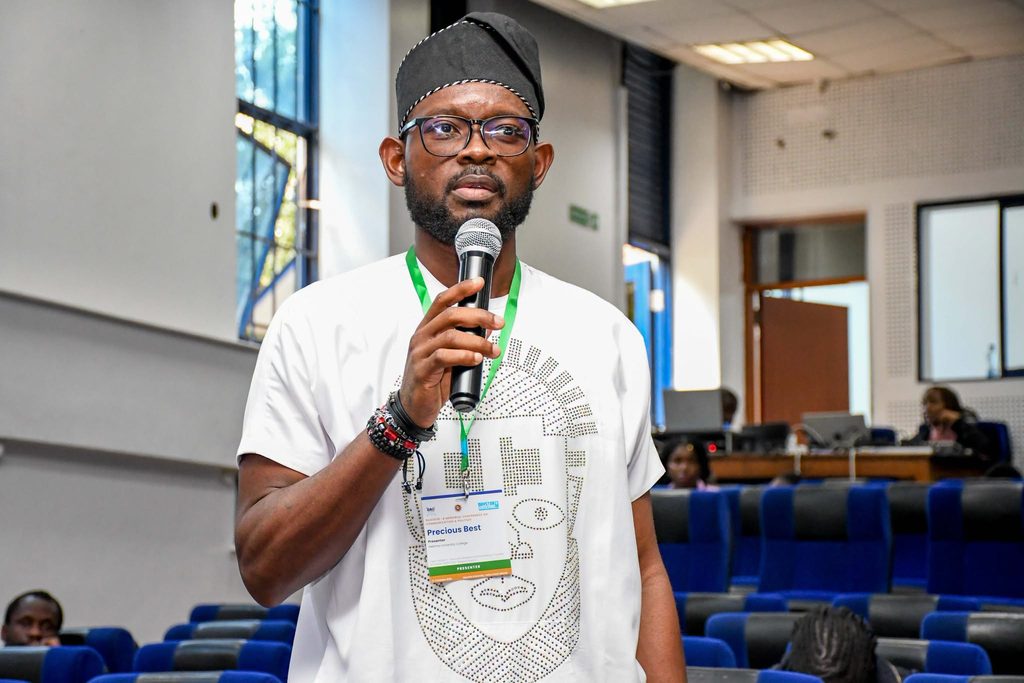
Precious Ogamode Best, SJ, a Nigerian Second-Year Theology student at Hekima University College, was among ten Hekima student representatives who attended the conference. His participation gave him an opportunity to present his academic research, engage in interdisciplinary discussions, and reflect on the relationship between political leadership, public communication, cultural identity, and Kenya’s democratic future. Ogamode presented a paper titled “Between the Drums and the Piano: Cultural Adaptation, African Identity, and Inculturation.” Drawing inspiration from Gabriel Okara’s poem Piano and Drums, the paper explored the relationship between cultural identity, adaptation and inculturation, particularly in the encounter between African cultures and Christianity, which arrived in Africa through historical encounters with Western traditions.
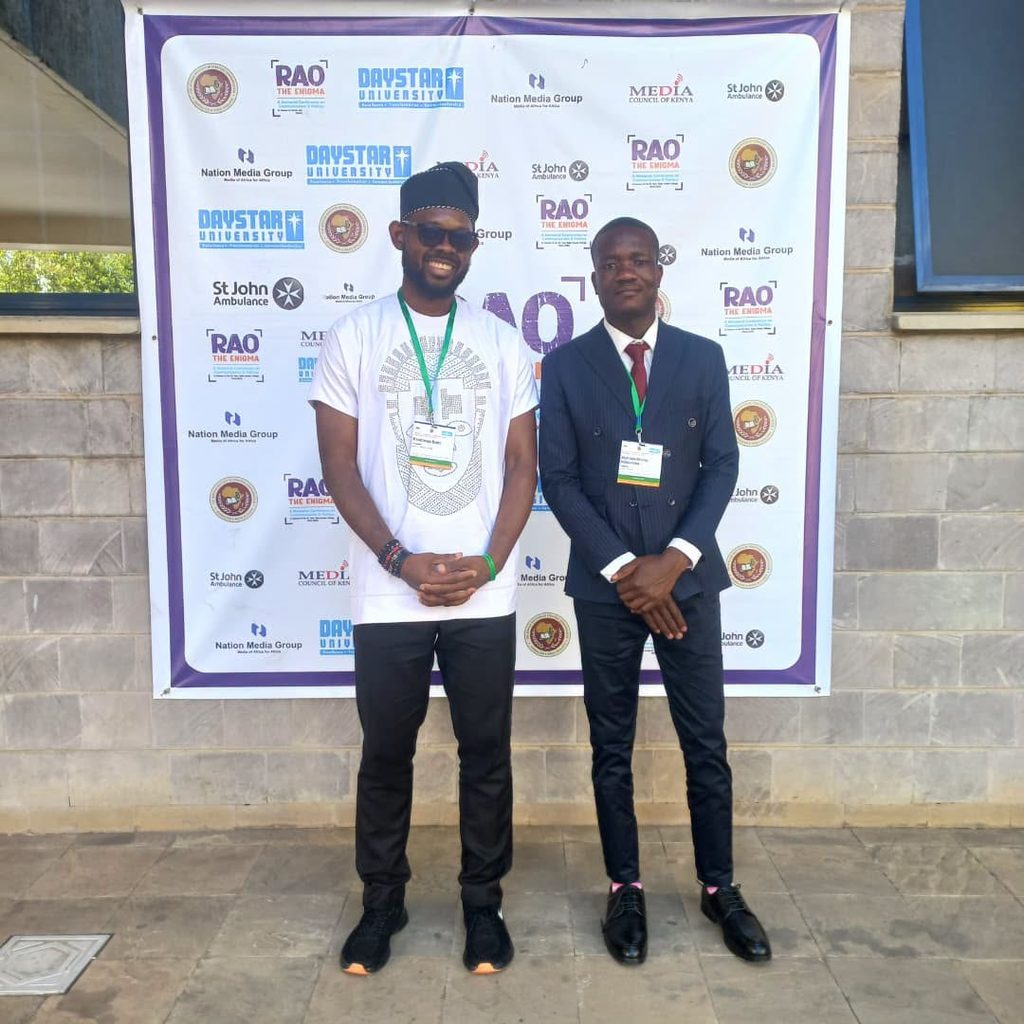
His presentation examined how individuals and communities can encounter and appropriate different cultural traditions without losing their identity. However, the conference discussions also enabled him to extend his argument into the political sphere, particularly through the lens of Raila Odinga’s political career and the various handshakes, negotiations and compromises associated with it. This prompted him to consider whether political compromises that may have been necessary or understandable in one historical context should automatically become models for future generations. He argued that political circumstances change and that each generation must critically discern which aspects of previous leaders’ legacies remain relevant, which require reconsideration and which should be left behind.
Promoting critical engagement with political legacies
One of the major reflections Ogamode drew from the conference concerned the relationship between political admiration and critical evaluation. While appreciating the importance of commemorating Odinga’s contribution to Kenya’s political history, he observed that the discussions appeared to lean more towards celebrating his legacy than critically examining its implications for the country’s political future. He emphasized that remembering a political leader should involve more than recounting achievements. It should also create room to examine the decisions, compromises, alliances and contradictions that shaped the leader’s political journey.
For Ogamode, honouring a political figure should not mean placing that individual beyond criticism. Rather, commemoration should encourage honest academic dialogue and allow subsequent generations to draw meaningful lessons from both the achievements and limitations of those who shaped their country’s history. His reflections also touched on Kenya’s contemporary political culture, particularly the importance of accountability, constitutional principles and the common good. He noted that political reconciliation and compromise can serve important purposes, but their value should be assessed in light of their consequences for citizens and their contribution to justice and public welfare.
As a theology student, he sees an important connection between political responsibility and theological ethics, particularly the obligation of leaders to promote justice, accountability and the well-being of society.
Strengthening interdisciplinary academic engagement
Beyond presenting his research, the conference offered Ogamode an opportunity to engage with scholars and professionals from different disciplines, broaden his academic perspectives and establish connections that could support his continued research and formation. He particularly appreciated the opportunity to explore transdisciplinarity, an approach that allows research originating in one academic discipline to contribute to conversations in other fields. Through the conference, he began exploring how theological and philosophical perspectives could enrich discussions on political communication, cultural identity, leadership and public responsibility.
He also had brief personal encounters with Rosemary Odinga, daughter of the late politician and Prof. Peter Anyang’ Nyong’o, Governor of Kisumu County, adding to his experience of participating in a conference dedicated to a prominent figure in Kenya’s political history. Reflecting on the experience, Ogamode thanked Hekima University College for the opportunity to participate in the academic gathering. He noted that the conference challenged his initial assumptions, opened new directions for his research and strengthened his appreciation of interdisciplinary scholarship.
His participation reflects Hekima University College’s commitment to academic engagement beyond the classroom, encouraging students to contribute theological and philosophical perspectives to contemporary social, political and cultural debates. For Ogamode, the central lesson from the conference is that inheriting a political legacy should not mean reproducing every strategy or compromise of the past. Rather, each generation has the responsibility to examine that legacy critically and discern what best serves justice, accountability and the common good.
