
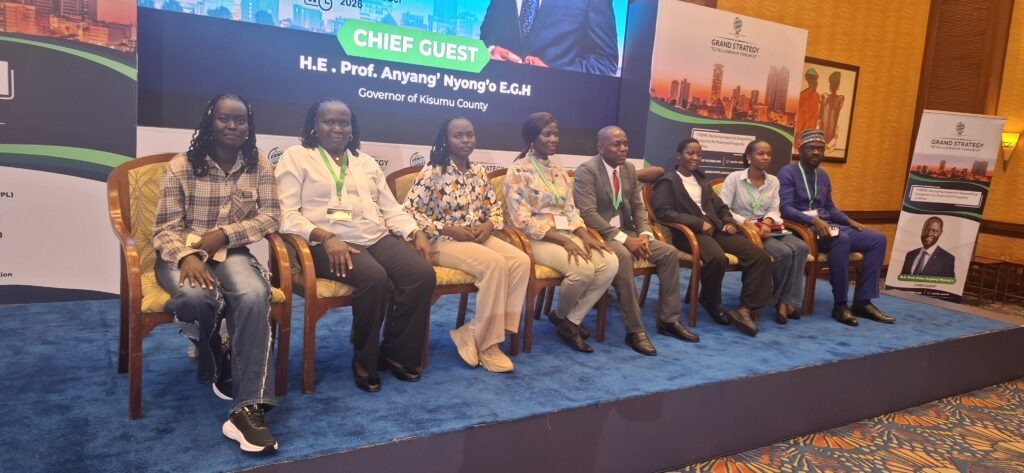
Through discussions with diplomats, security experts, and policymakers, Hekima University College students explored how Africa can leverage its geopolitical position, resources, and strategic partnerships to advance peace, security, and prosperity.
Students from Hekima University College’s School of Arts and Sciences, pursuing the Master of Arts in Peace Studies and International Relations (IPSIR), participated in the inaugural Global Centre for Policy and Strategy (GLOCEPS) Grand Strategy Fellowship Forum held on 29 October 2026 at Serena Hotel, Nairobi. The forum, themed “Nurturing Impactful Geopolitical Footprints for Peace and Prosperity in Africa,” brought together diplomats, security practitioners, scholars and university students from various institutions to examine Africa’s position in an increasingly competitive global geopolitical environment.
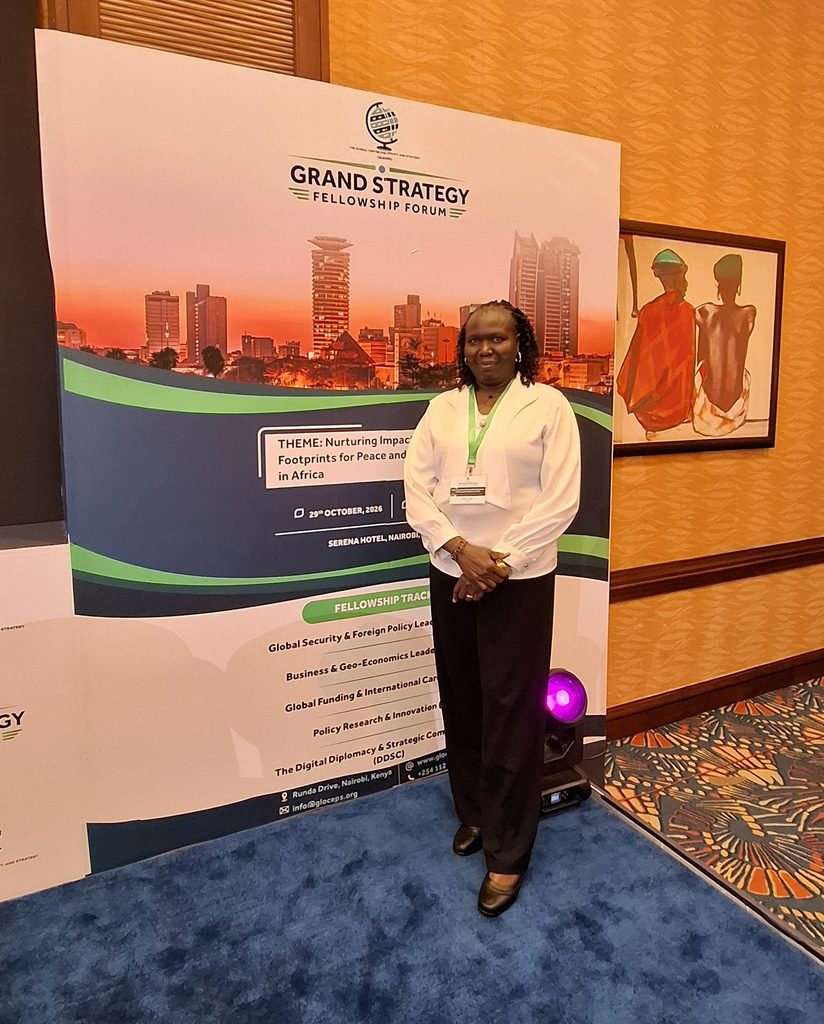
Among the Hekima participants was Martha Iliwa Yosia, a second-year IPSIR student from South Sudan, whose participation offered an opportunity to connect classroom knowledge with practical discussions on diplomacy, international security, economic development and regional cooperation.
According to Ms Yosia, the program featured five thematic breakout tracks covering security and foreign policy, geo-economics, global funding and careers, policy research, and digital diplomacy. These sessions gave students opportunities to interact directly with practitioners and exchange perspectives with fellow students from institutions including the University of Nairobi, Kenyatta University, JKUAT, Strathmore University, the Technical University of Kenya, and USIU-Africa. The discussions were followed by a round-table session, a plenary on Eastern Africa’s security situation, remarks from invited speakers and a keynote address by the Chief Guest, Prof. Peter Anyang’ Nyong’o, Governor of Kisumu County.
Africa’s geopolitical influence and strategic partnerships
One of the highlights for Yosia was the opportunity to engage Ambassador Dr. Josephine Ojiambo on how African countries could turn the growing competition among global powers, particularly the United States, China, Russia and the Gulf states, into opportunities for their own development rather than becoming arenas for external rivalries. In her question, Yosia sought to understand how African governments could negotiate strategically with competing international partners while safeguarding their national interests.
The response introduced what her report calls the “Nairobi Auction Model,” an approach that encourages African countries to present concrete development projects to different international partners and allow them to compete through favorable financing, technology transfer, and local employment commitments. The discussion emphasized that African countries should negotiate projects rather than pledge political loyalty to particular global powers. It also highlighted the importance of diversifying development partners, matching projects with the strengths of different countries and avoiding excessive dependence on a single lender. For Yosia, this exchange demonstrated the importance of strategic thinking in international relations and the need for African countries to approach global partnerships with clearly defined national and continental interests.
Key lessons on peace, security and development
The forum also highlighted the relationship between economic development and sustainable peace. Speakers observed that insecurity in Africa cannot be addressed exclusively through military interventions because economic exclusion, unemployment and weak value chains contribute to instability. The discussions emphasized the importance of developing industrial corridors, strengthening local production, investing in clean energy, and creating sustainable livelihoods for young people as part of broader strategies to prevent conflict and radicalization.
Participants also examined the need to strengthen regional institutions, particularly the East African Community (EAC) and the Intergovernmental Authority on Development (IGAD), to improve coordination and enable African countries to address regional security challenges more effectively. Another important takeaway was the need for African governments to develop clear national grand strategies grounded in their interests and priorities. Speakers argued that hosting international institutions, as Nairobi does, should translate into greater African influence in shaping global policy discussions, alongside tangible benefits such as employment, procurement and investment opportunities.
Academic and professional benefits
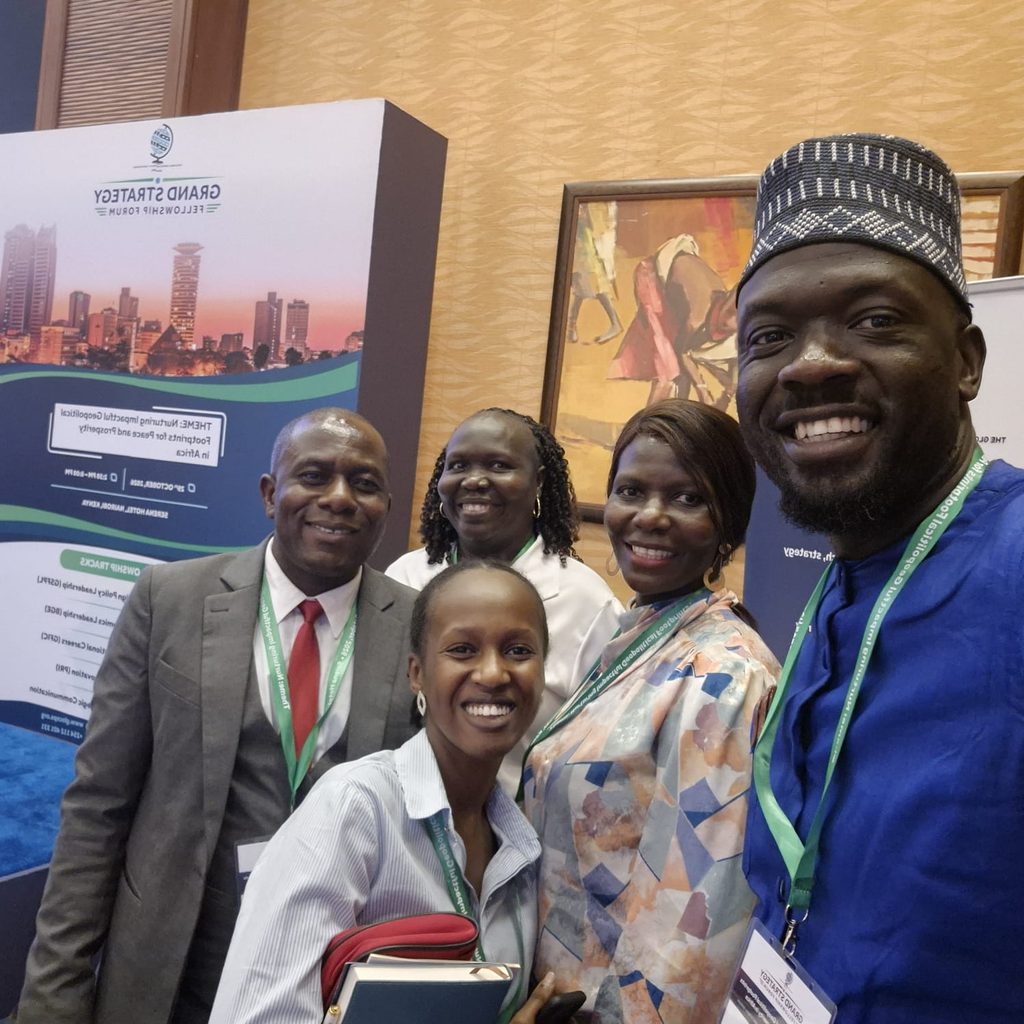
Reflecting on her participation, Yosia described the forum as an enriching academic and professional experience. It helped bridge the gap between theoretical concepts discussed in the classroom and the practical realities of diplomacy, international security and development policy. The sessions on multilateral careers provided insights into the importance of professional networking, internships, language proficiency, particularly English and French, and transparent, merit-based recruitment processes.
She also gained a deeper appreciation of research as a practical instrument for policymaking, noting the importance of producing evidence that governments can translate into actionable policies. Discussions on digital diplomacy further exposed her to emerging questions surrounding African-led artificial intelligence, language models and data sovereignty. Beyond the formal sessions, the forum helped her build connections with policymakers, practitioners, and fellow university students, while introducing her to GLOCEPS’ mentorship and policy dialogue opportunities.
For Yosia, participating in the forum was particularly meaningful as a South Sudanese student and refugee resident in Kenya. The discussions on peace, security, regional cooperation and sustainable development resonated with the realities facing communities affected by conflict and displacement. She thanked Hekima University College for sponsoring her participation and GLOCEPS for the opportunity to engage in the forum. Her experience underscores the importance of exposing IPSIR students to policy and diplomatic platforms where they can engage directly with practitioners, challenge their academic perspectives and contribute to conversations on Africa’s future.
The forum reinforced a central message: Africa’s geopolitical potential can translate into lasting peace and prosperity only when informed leadership, strategic partnerships, and strong institutions are matched by the capacity to turn ideas into concrete outcomes.
