
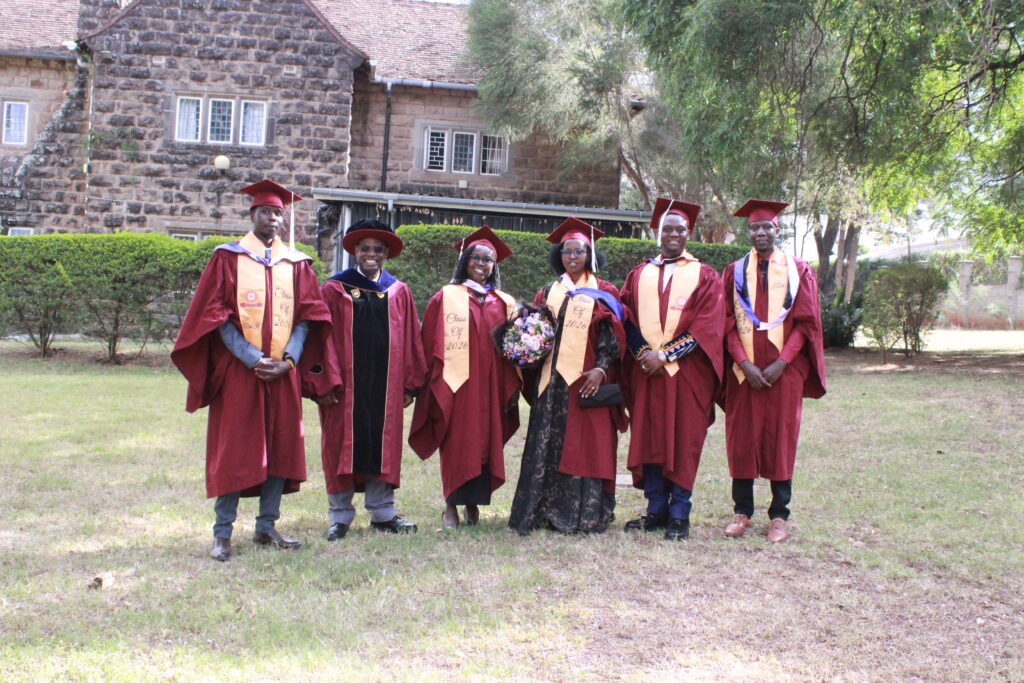
The outgoing Dean of Hekima’s School of Peace Studies and International Relations, now renamed the School of Arts and Sciences, Rev Dr. Elisée Rutagambwa, SJ, has expressed joy and pride in the graduating class of 2026, reflecting on the shared journey that brought the students from their initial aspirations to academic achievement.
Speaking during the banquet held in honor of the graduates, Dr. Rutagambwa described his remarks as an expression of joy, comparing the work of academic formation to that of a midwife, through which an initial dream or idea gradually becomes reality. He emphasized that the graduation ceremony celebrated more than academic certificates; it marked the culmination of a formative journey. Having welcomed the students into the Peace Studies and International Relations program, Dr Rutagambwa said he had the privilege of witnessing their development firsthand. He recalled their initial concerns, expectations and hopes, noting with satisfaction that many of the aspirations they brought into the program had now been realized.
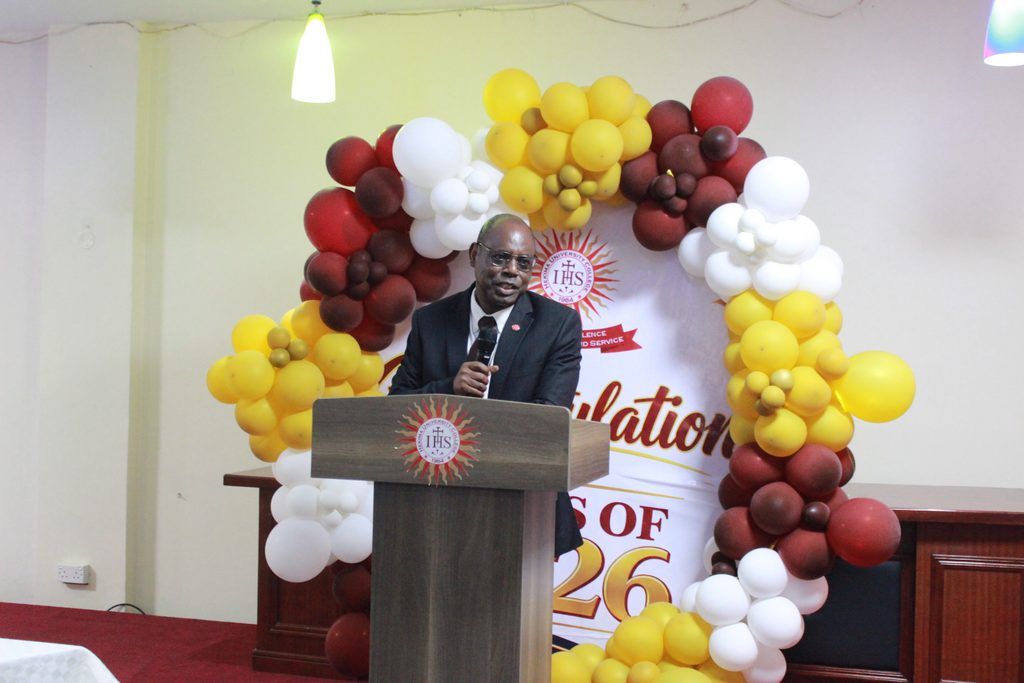
His reflection also traced the origins of the Institute of Peace Studies and International Relations, which began as an idea among theology students in response to the widespread conflicts that affected Africa during the 1990s, including the genocide in Rwanda and other conflicts across the continent. The students questioned how the institution could continue focusing solely on theology while seemingly overlooking the pain and suffering of African communities. Their discussions and subsequent peace dialogue eventually led to the Institute’s establishment.
Dr. Rutagambwa explained that the program was therefore conceived not simply as a place for acquiring academic knowledge, but as an institution committed to forming people whose consciousness is rooted in the African experience and who are prepared to shoulder the concerns and suffering of their communities. Addressing the graduates, he reminded them that their formation as peacemakers and experts in international relations marked the beginning, not the end, of their mission. He encouraged them to sustain the relationships developed during their studies, recognizing that the community they had become part of extended beyond the region to embrace Africa and the wider world.
He urged the graduates to become ambassadors of the institution by translating their academic formation into practical action. In particular, he challenged them to build relationships grounded in peace, truth, unity, solidarity and compassion, insisting that their conduct should reflect the values they had learned at Hekima.
“Do not just talk. Walk the talk,” he told them, encouraging them to demonstrate through their actions that they had been formed not only to understand peace and international relations but also to contribute meaningfully to building peaceful relationships.
Dr. Rutagambwa further called on the graduates to carry forward the resilience, unity and determination they had demonstrated throughout their studies, especially when confronted with difficulties in their professional and personal journeys. He concluded by praying for God’s blessings upon them, urging them to remain steadfast and united in their commitment to advancing peace and unity.
For the outgoing Dean, the graduation was both a moment of personal fulfilment and a celebration of a shared institutional journey: an idea born out of concern for Africa’s suffering had grown into a program whose graduates are now being sent forth to contribute to peacebuilding on the continent and beyond.
By Pamela Adinda, HUC Communications and International Office Coordinator
