
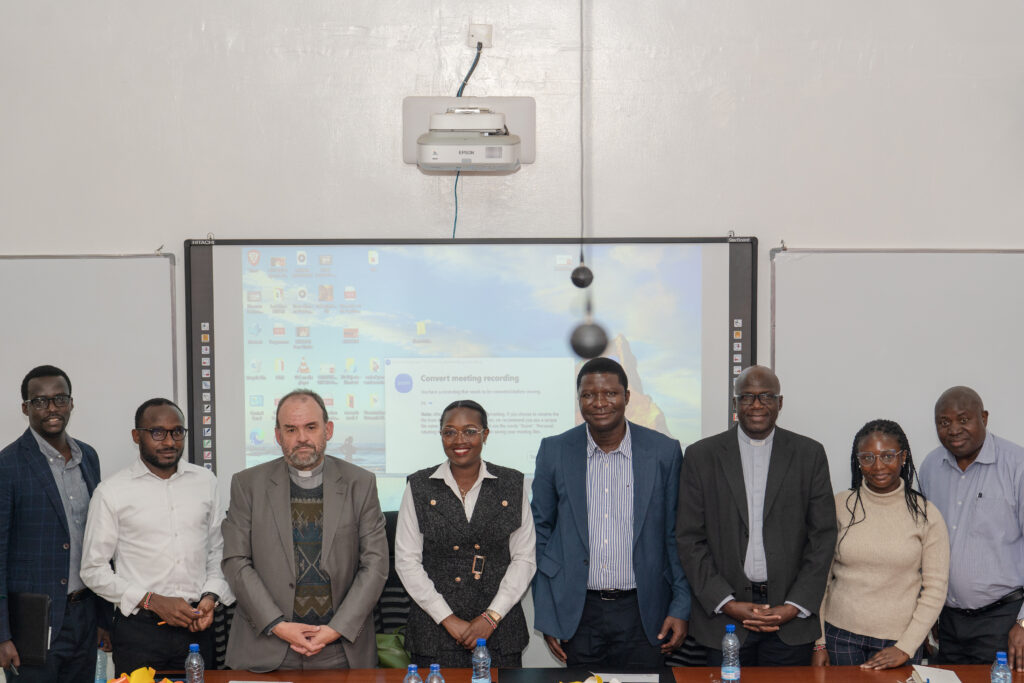
Hekima University College (HUC) brought together young people, scholars, practitioners and pastoral leaders for its annual Youth Conference on 3rd September 2026 under the theme “Youth and the Quest for Just Leadership and Accountability.” Held at the HUC Auditorium, the conference examined young people’s place in leadership and governance through historical, theological, ethical, experiential, and pastoral perspectives. The conference focused on a central question: how can young people move from being recipients of decisions made by others to becoming active participants and responsible architects of societies founded on justice, accountability and the common good? The discussions emphasized human dignity, solidarity, subsidiarity, participation and service as essential principles of just leadership.
Principal Calls for Meaningful Youth Participation
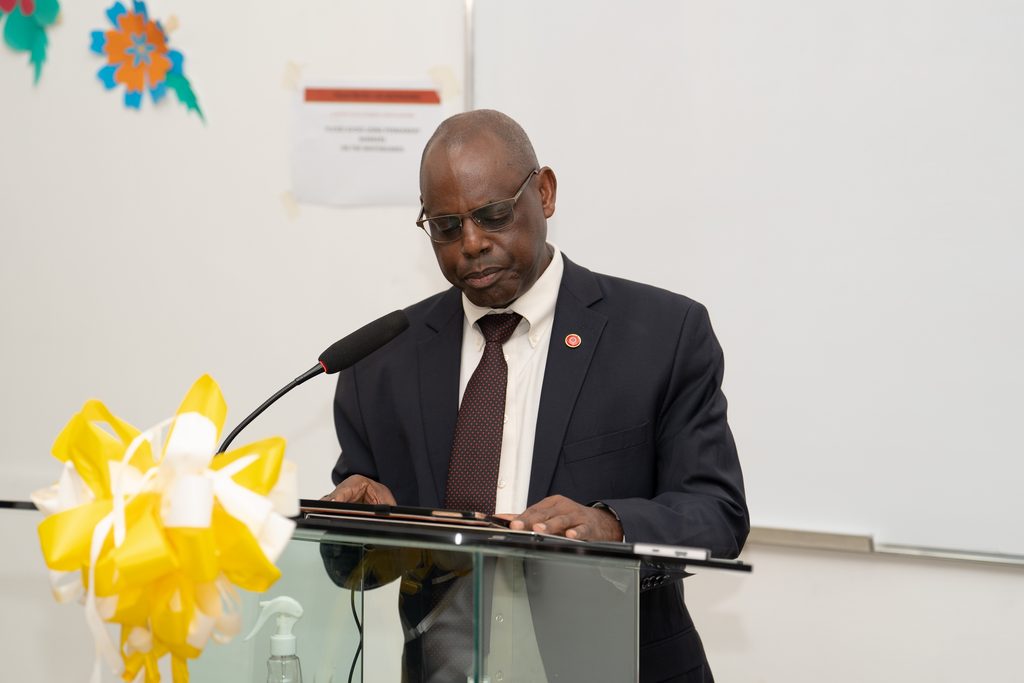
In remarks delivered on his behalf by former Dean of Hekima Peace Studies and International Relations Institute, Rev. Dr. Elisee Rutagambwa, SJ, HUC Principal Rev. Dr. Marcel Uwineza, SJ, highlighted the significant proportion of young people in Africa and their continued underrepresentation in institutions where decisions are made. He noted that young people directly experience the consequences of poor governance, corruption, inequality, underemployment, exclusion, violence, and environmental degradation.
The Principal’s remarks underscored the need to harness the demographic dividend represented by Africa’s young population rather than allowing exclusion to become a source of social instability. Among the challenges identified were corruption, the ethnicisation of politics, the commodification of public trust, impunity, unemployment, brain drain, migration, identity crises and mental and public health concerns.
Rev. Dr. Uwineza described just leadership not simply as occupying public office or exercising authority, but as understanding power as a responsibility. Such leadership requires integrity, accountability, participation, justice, solidarity and service. The remarks challenged participants to consider not merely who possesses power, but how power is exercised, for whom and toward what end. Drawing on the Ubuntu principle associated with John Mbiti, “I am because we are,” the Principal’s message called for active participation and responsibility among young people.
The Conference Presentations
Youth Leadership Through a Historical Lens
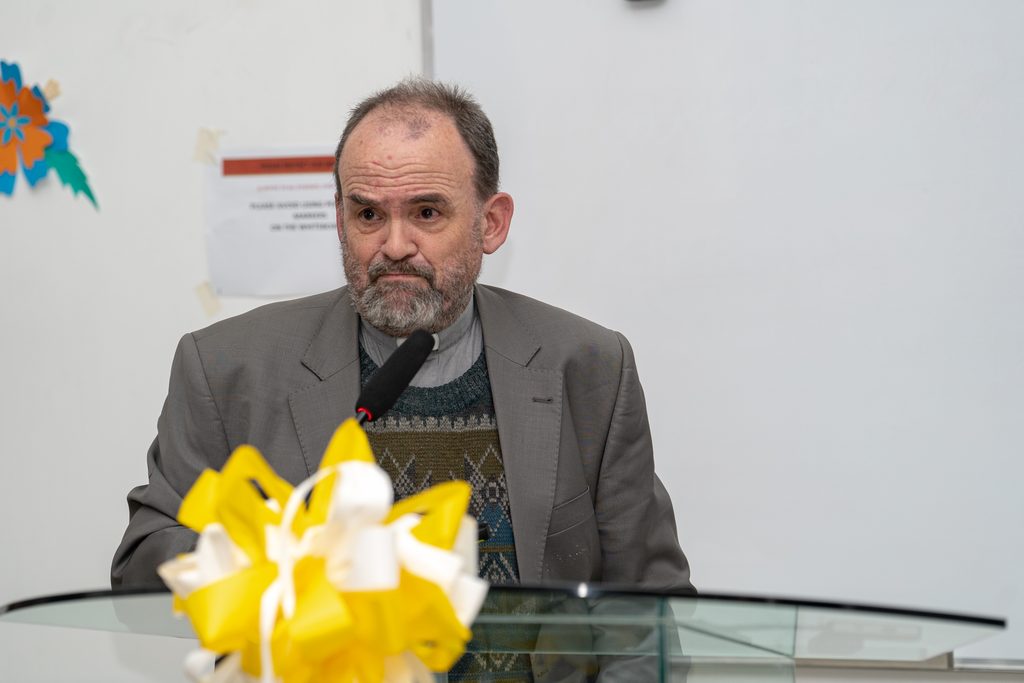
Presenting the historical perspective, Dr. Anthony Egan, SJ, examined youth as a biological, social, cultural and political construction. He traced youth participation in movements for social and political change, including the anti-war, anti-colonial, anti-establishment and civil-rights movements of the “deep and long 1960s” and the political mobilization that accompanied Africa’s decolonization and independence.
Dr. Egan questioned whether young people who eventually attain positions of authority will reproduce the political systems they once challenged or create more accountable forms of leadership. His presentation raised the critical questions: “what youth, whose leadership, and accountable to whom?” He cautioned that the challenge is not merely to give young people access to leadership, but also to examine what constitutes genuine leadership and the forms of accountability young people demand.
A Christian Vision of Youth and Leadership
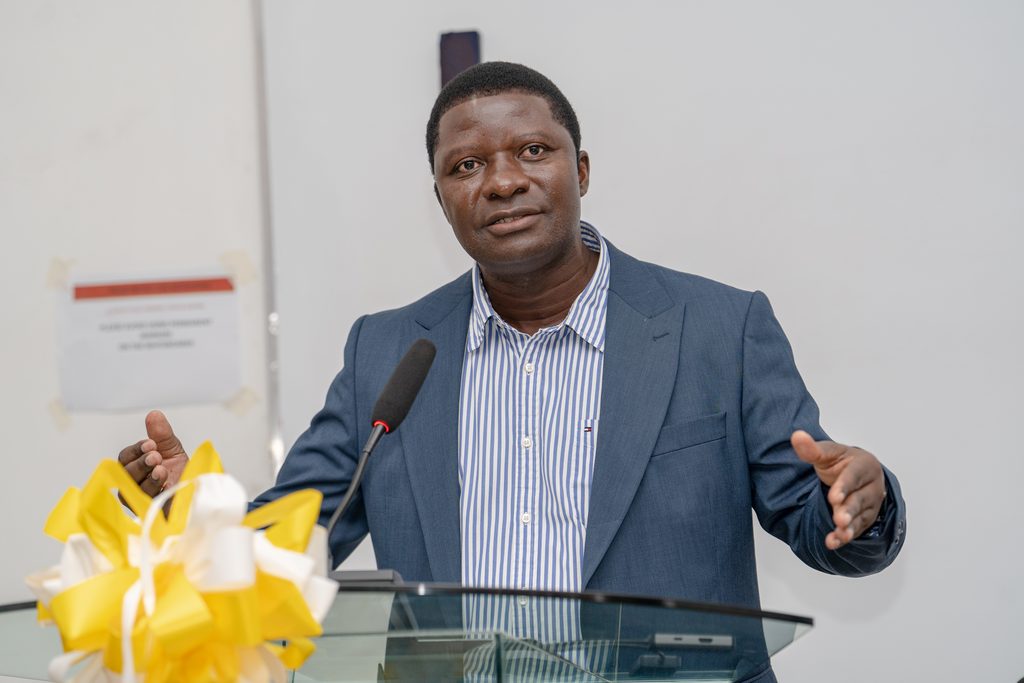
Rev. Dr. Chikere Agbo, SJ, approached the conference theme from Christian anthropology. Drawing particularly on Pope Francis’ Christus Vivit, he challenged portrayals of young people as immature, troublesome or merely waiting to become tomorrow’s leaders. Instead, he presented young people as persons with dignity and agency who can contribute meaningfully to society now. He called on both the Church and society to create genuine opportunities for young people to participate in decision-making and shape the future.
Rev. Dr. Agbo contrasted manipulation, intimidation, repression, political patronage and the accumulation of power with honesty, transparency, accountability, justice, participation, solidarity, human dignity and care for creation. He emphasized that society should not simply seek to “fix” young people, but should also address the structures and practices of leadership themselves.
Young People’s Lived Experience of Leadership
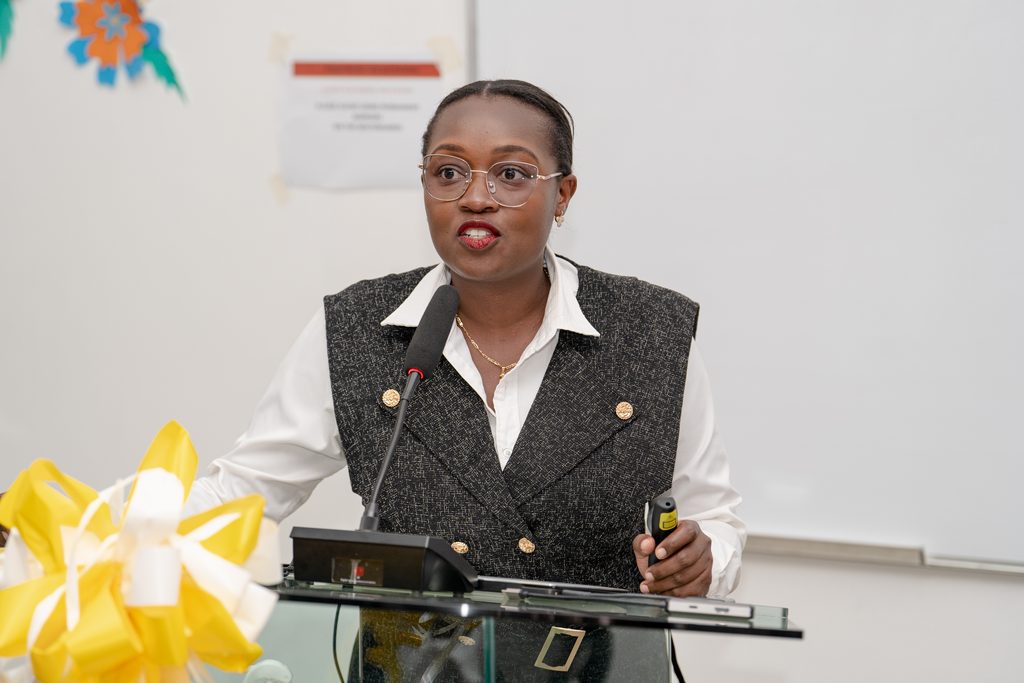
Bringing an experiential perspective, CPA Angela Mbuthia, a youth policy expert, reflected on her experience in student leadership, youth policy and international networks. She described leadership as a duty and a form of service rather than a privilege, emphasizing that people must come before power. Mbuthia identified transparency, responsibility and trust as essential to the relationship between governments and citizens. She also challenged tokenistic forms of youth participation, questioning whether youth councils and advisory structures genuinely give young people influence or merely create the appearance of participation.
She encouraged young people to cultivate networks across national and cultural boundaries while remaining rooted in their communities. Listening, evidence, data and empathy, she argued, are important tools for effective leadership. Her message urged young people to choose courage over convenience, service over self-interest, truth over applause and justice over power.
Leadership as Service and Social Transformation
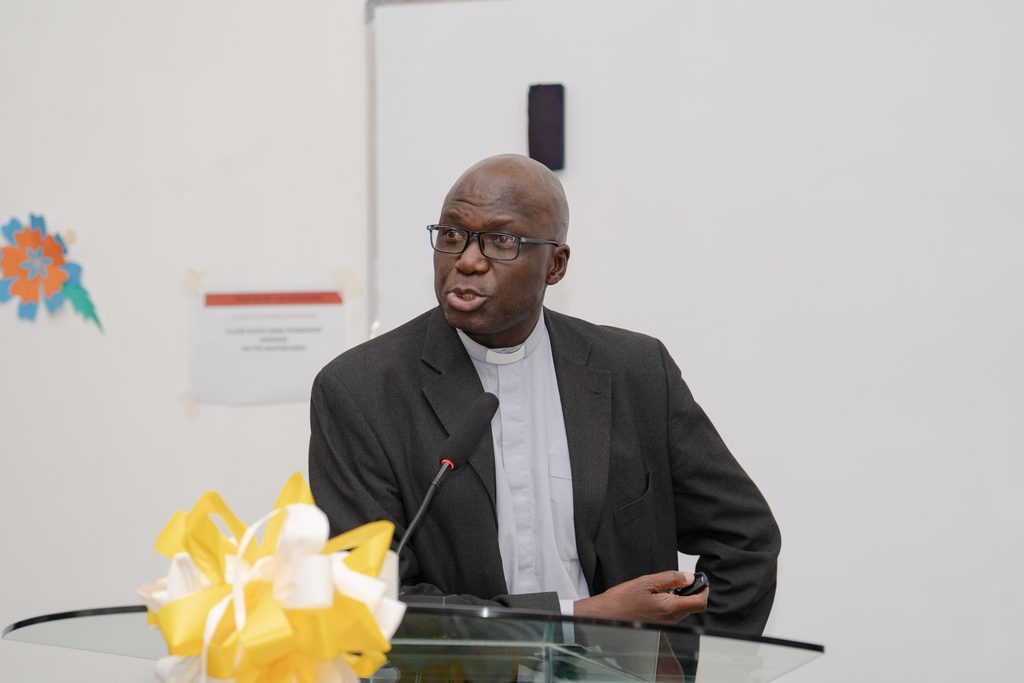
The pastoral dimension of the conference was presented by Rev. Dr. Alex Mulongo Wanyama, SDB, who focused on the spiritual and ethical foundations of leadership. Drawing on kenotic theology, the self-emptying of Christ, he proposed servant and kenotic leadership as a model for Christian communities and society. He also connected this vision with the pastoral approach of St. John Bosco and the image of Jesus as the Good Shepherd.
Rev. Dr. Mulongo emphasized that pastoral engagement should contribute to social transformation rather than remain inward-looking. He distinguished lasting social transformation from short-lived activism and called for leadership grounded in social justice, the common good, human dignity and responsible engagement with society. He further encouraged young people to recognize and respect diversity rather than allowing political and social differences to become grounds for hostility.
From Dialogue to Responsible Action
The conference discussions brought together the different perspectives presented during the day and challenged participants to consider how young people can exercise leadership differently from inherited patterns of power. The dialogue addressed systemic barriers to transformation, meritocracy, unequal access to education, compassion and empathy in governance, the influence of prevailing worldviews, the limitations of popular movements such as the Arab Spring, and the relationship between religious practice and social responsibility.
Participants also examined the distinction between social activism and sustained social transformation, emphasizing critical consciousness and community-based approaches, including Small Christian Communities, as avenues for advancing social change. The Church’s role was considered in relation to its responsibility to engage society without simply presenting itself as another civil institution.
A significant conclusion of the conference was that accountability must be demanded not only from existing leaders but also practiced by young people themselves. Youth leadership, therefore, should not be understood simply as replacing older leaders with younger ones, but as an opportunity to cultivate a different culture of leadership rooted in service, participation, integrity, justice, responsibility and the common good.
The Principal’s remarks further challenged participants to move the conference’s intellectual discussions beyond the academic setting into public life, policymaking and the communities where young people live. Both institutions and young people were given responsibilities: institutions must create genuine spaces for youth participation, while young people must prepare themselves for leadership through formation, integrity, service and commitment to the common good.
A Call to Young Leaders of Today
The conference affirmed that young people should not be regarded merely as beneficiaries or future leaders. They are already participants and leaders in the present, with both a responsibility to promote accountable leadership and a legitimate claim to meaningful participation in decision-making. For Hekima University College, the conference provided an important platform for connecting academic inquiry, theological reflection, lived experience and pastoral accompaniment in addressing one of the defining questions facing contemporary Africa: how young people can participate meaningfully in shaping just and accountable societies.
The conference concluded with Fr. Gasper Sunha, S.J., presenting gifts to the speakers in appreciation of their contribution, while Boris Foka, S.J., President of the Hekima University Students’ Association, led the closing prayer.
The conference showed that the quest for just leadership is not only about who will occupy positions of authority in the future, but about how young people exercise agency today and the kind of society they choose to build for generations to come.
By Fr. Francis Mangena and Pamela Adinda
