
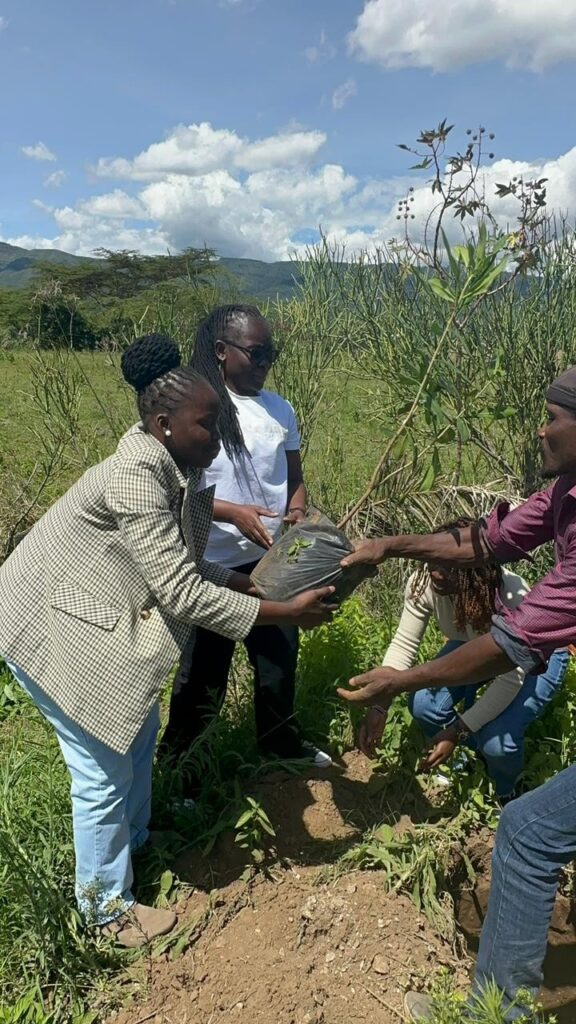
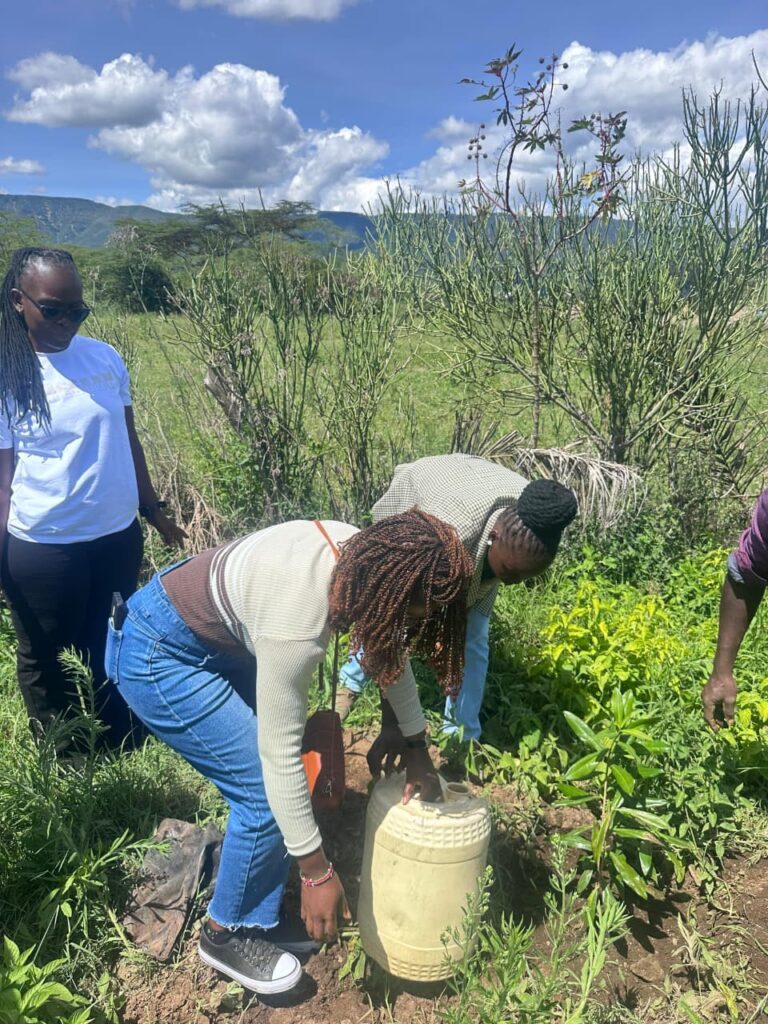
On the 30th of March 2026, three students, Mive Koyo, Valerie Ulwenya, and Sonita Njume, represented Hekima University in a church Forest Creation Program activity organized by Oiko Diplomatique at St. Joseph Catholic Church, Muniu, Longonot parish, St Simon and Jude diocese of Nakuru County. Oiko Diplomatique’s mandate is to advance practical, community-rooted approaches to ecological restoration through stakeholder engagement, applied research, and partnership-building. It is from the latter that this initiative emerged.
Oiko Diplomatique has been exploring the concept of church forests as a model that integrates environmental restoration with faith-based stewardship. The Organization’s inspiration is drawn from the Ethiopian Orthodox Church Forest project, which illustrates how church-owned forests are sacred spaces that foster reverence, protection, and long-term ecological care. The activity’s objective was to establish a pilot church forest in Mai Mahiu through a structured, faith-based process that integrates conceptual grounding, community engagement, and practical tree planting.
Key Issues Discussed
1. Theological background of tree growing (Teachings from Laudato Si)
In Laudato Si’, Pope Francis teaches that caring for trees flows from the biblical call in Genesis to “till and keep” the Earth as stewards, not owners. Trees reflect God’s loving plan, forming part of the great book of creation that reveals divine beauty and sustains all life in interdependence. Planting and protecting trees counter the sins of exploitation and deforestation that harm biodiversity and contribute to poverty. This care demands ecological conversion, an attitude of awe, gratitude, and responsibility that rejects selfish anthropocentrism. Ultimately, growing trees becomes an act of faith and love, cooperating with the Creator to restore fraternity with our common home.
2. Lessons from Ethiopian church forests
Ethiopian Orthodox Church forests stand as living testimonies to the fact that deep spiritual conviction can sustain biodiversity for over 1,500 years, even when surrounding landscapes have lost nearly all their native trees. These sacred groves, often viewed as miniature Gardens of Eden or “clothes of the church,” teach that protecting nature flows naturally from seeing creation as holy ground, where trees symbolize God’s mercy, presence, and the harmony of paradise. A central lesson is that faith communities can serve as powerful stewards, blending religious reverence with practical care to preserve habitats, prevent soil erosion, support pollinators for nearby farms, store water and carbon, and maintain ecological balance in fragmented landscapes. They demonstrate the effectiveness of community-rooted, hybrid protection models rooted in tradition and respect rather than top-down rules alone, showing how taboo against destruction and liturgical connection to the land foster long-term resilience against deforestation and climate stress. To add to that, these forests invite broader ecological conversion, integrating spirituality with action to restore our common home and linking care for trees directly to justice, worship, and the flourishing of all life.
3. Training in Tree Planting and Care
Tree planting is important because it improves air quality, reduces soil erosion, provides shade, conserves water, and supports biodiversity. It also combats climate change, enhances the environment, and provides fruits, timber, and medicine. Medicinal trees such as neem can cure skin infections and malaria. Moringa enhances nutrition and immunity, while eucalyptus can be useful for coughs and colds. Also, African cherry (Prunus Africana) is beneficial in prostate-related treatment. Trees therefore improve the environment, promote public health, and provide economic benefits for communities.
4. Way forward
HIPSIR can partner with Oiko Diplomatic through the following targeted interventions:
- Convene annual forums that bring together students and key stakeholders to provide practical training on tree growing. This would include knowledge of the appropriate species to select, as well as the environmental and socio-economic benefits of afforestation. These forums should also link environmental conservation to conflict prevention.
- Establish a formal internship program for students interested in resource-based conflict resolution. The program should combine academic knowledge with field exposure, mentorship, and practical skills in conflict analysis and mediation.
- Partner with the Centre for Research, Training and Publication to undertake focused research on resource-based conflicts by examining their drivers and proposing evidence-based pathways to resolution. Outputs can include policy briefs and academic publications.
By Sonita Njume, Mive Koyo, and Valerie Ulwenya
