
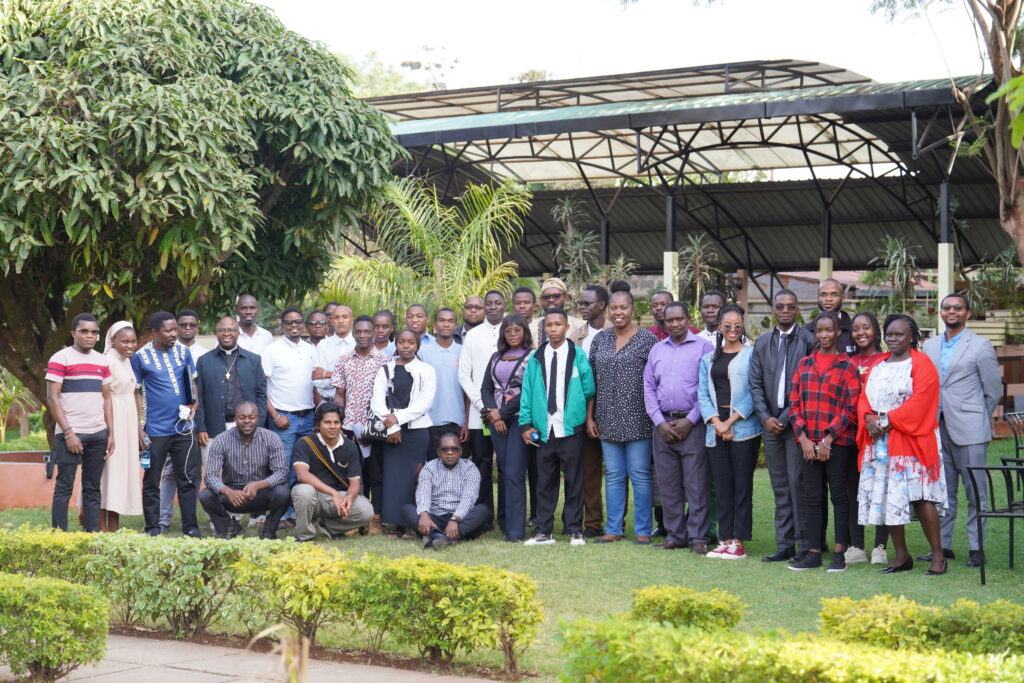
Friday, 6th February 2026, marked a remarkable academic occasion as two distinguished institutions—Hekima University College and Tangaza University—came together for an inter-university debate. The event, which began at 3:00 p.m. at the Hekima University Campus along Joseph Kangethe Road, was marked by the arrival of the guest delegation from Tangaza University, comprising approximately 30 participants. The gathering highlighted and reinforced the strong and growing bond between the two universities.
As participants assembled in the campus auditorium, Olivier, a second-year student of theology and Priscilla, a student of Peace studies and international relations, serving as the Masters of Ceremony, guided the audience through the program and explained how the event would proceed. A prayer led by a deacon officially marked the beginning of the debate. This was followed by welcoming remarks from the President of the Hekima Student Association, Chancy Mterera. In his address, he emphasized the significance of engaging in debates with other universities, noting that such engagements broaden students’ intellectual horizons. Referring to a previous debate that concluded that, while the Church has contributed to peace, it can still do more, he observed that the same conclusion applies to Hekima University itself. He remarked, “Just as we invited the Church to do more, we recognized that we ourselves could also do more. Today’s inter-school debate is a concrete response to that realization. By gathering students from different institutions, we are intentionally expanding our academic space…”
The topic of the debate was: “Do universal human rights still offer a defensible moral foundation for global justice in a culturally plural world?” The central issue to be addressed was that, having emerged from the aftermath of global conflict, the 1948 Universal Declaration of Human Rights established a moral baseline for human dignity that continues to shape international justice. However, in an increasingly culturally plural society, the tension between universal moral claims and local traditions raises critical questions: Can human rights serve as a defensible foundation for justice, or are they merely Western impositions? Given that most participants were theological scholars, the debate invited deeper reflection on concepts such as Imago Dei and natural law, challenging students to consider whether a shared moral framework can truly honour global cultural diversity or whether it requires a more inclusive and dialogical interpretation.
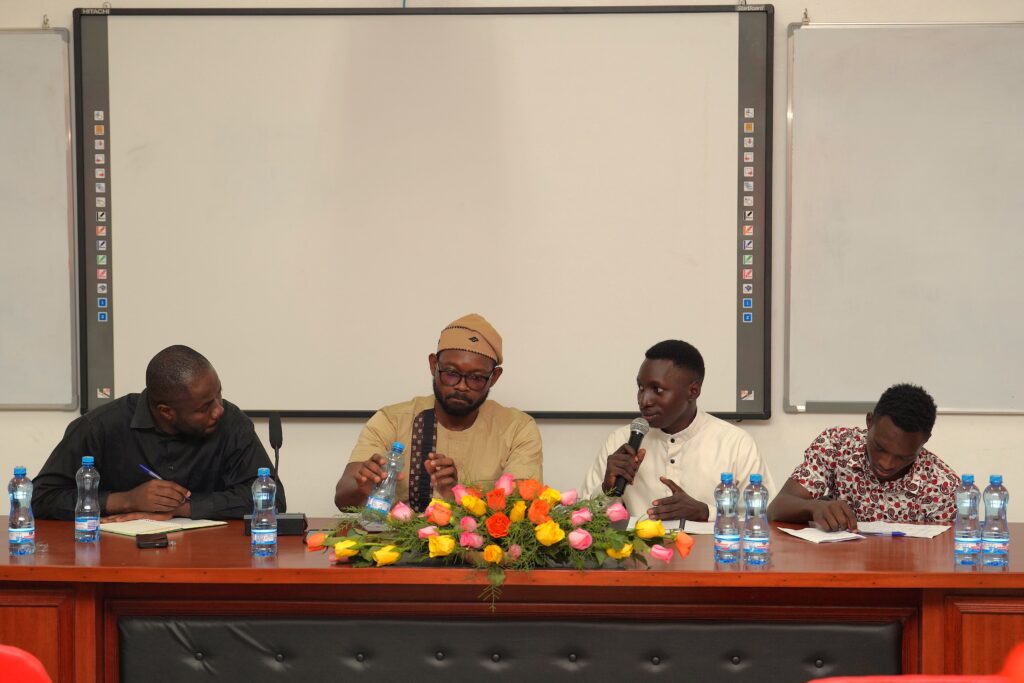
The proposers of the motion from Hekima University, namely Boris Francois Foka and Precious Best, affirmed that universal human rights do indeed offer a defensible moral foundation for global justice. They grounded their argument in three major points. First, they asserted that universal human rights are rooted in human dignity that transcends cultures, meaning that these rights are recognized rather than created by any particular society. Second, they highlighted historical injustices caused by cultural systems, citing theslave trade, which was shaped by European conceptions of dignity, as well as the atrocities committed by the Nazis in Germany. These examples, they argued, demonstrate that cultures themselves can perpetuate severe injustices and therefore cannot serve as the ultimate foundation for justice. Third, they contended that rejecting universal human rights leads to moral absurdity and social chaos, undermining the universal moral standards necessary to protect vulnerable groups such as children. They concluded their opening statement with the assertion: “Cultural diversity is a fact; cultural relativism is a choice.”
In response, the opposers of the motion from Tangaza University, namely Victor Mungai and Eretu Timothy, rejected the claim that universal human rights provide a foundation for global justice. They argued that the concept of human rights is too broad to be encapsulated within a universal framework, noting that even smokers and drunkards are considered rights holders. This led them to question what human rights truly are—whether they constitute entitlements or impositions, and what their ultimate moral basis might be. According to the opposers, universal human rights tend to take precedence over both societal and individual interests, potentially undermining cultural autonomy. They further argued that each culture possesses its own distinct norms and values, and that the evaluation of these norms should remain within the culture itself rather than being imposed externally. They noted that even the Universal Declaration of Human Rights reflects the cultural context in which it was drafted, arguing that its European origins compromise its claim to universality. Instead, they proposed natural law as a more suitable moral foundation for global justice.
The exchange of arguments sparked significant interest among audience members, leaving some visibly astonished and uncertain about which position to adopt, while others eagerly awaited the rebuttals. During the rebuttal phase, representatives from Hekima University argued that the drafting of the Universal Declaration was an international effort, involving multiple countries, even though many African nations had not yet attained independence at the time. They emphasized that universal human rights do not impose demands on societies but rather set standards that assist societies in developing their own values and norms. They further contended that the debate topic itself contained an inconsistency, arguing that if universal human rights exist, there should be no question about their legitimacy as a foundation for global justice.
Addressing the opposers’ endorsement of natural law, the proposers argued that natural law itself is problematic and internally contested. They noted that natural law, for example, may rank masturbation as a graver sin than rape, despite rape causing significantly greater harm. They also argued that natural law can be used to justify practices such as homosexuality and polygamy, highlighting its interpretive flexibility and moral ambiguity. According to the proposers, the real challenge lies not in the universality of rights or laws, but in their application and interpretation. Consequently, they maintained that universal human rights must remain the foundation for global justice.
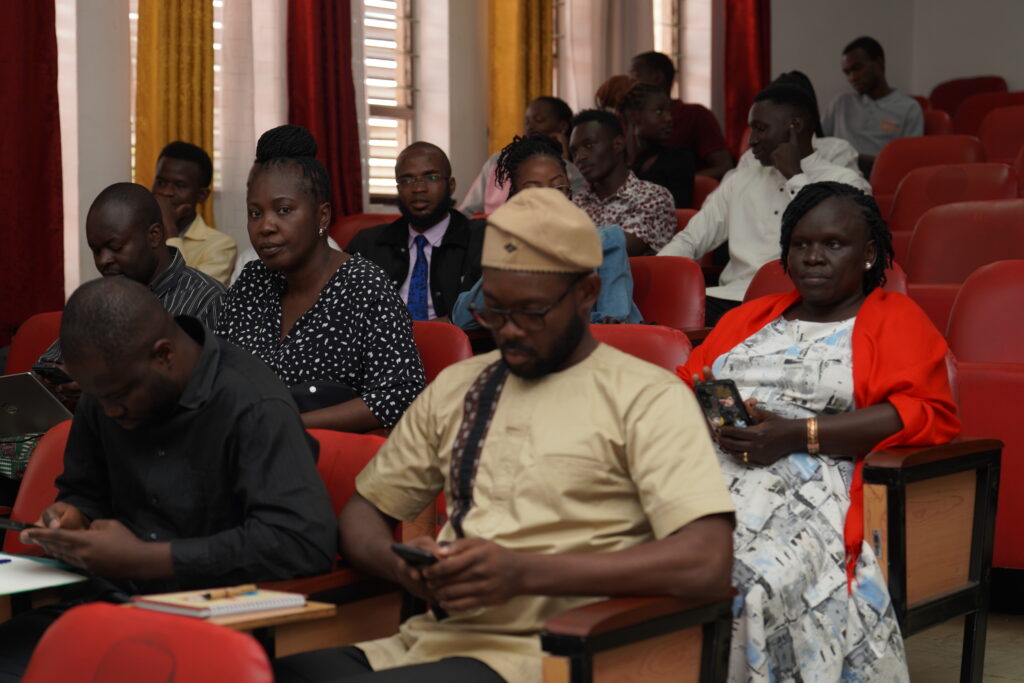
The opposers remained unconvinced, raising the critical question of who was represented at the table during the drafting of the Universal Declaration. They argued that universal human rights represent a European concept imposed upon African societies, warning that “if you are not on the table, then you are on the menu to be devoured.” They claimed that the Declaration was compiled under the leadership of the wife of the former U.S. President Franklin D. Roosevelt, and emphasized that not all independent countries—such as Egypt, Ethiopia, and Liberia—were involved in its formulation. They further argued that Africa possessed moral systems long before the emergence of universal human rights, and noted that membership in the United Nations requires conformity to its standards. For this reason, they asserted that universal human rights cannot serve as a foundation for global justice, describing them as a tool of oppression and a cushion upon which Africans fall while enduring continued exploitation and domination.
Following these exchanges, audience members were invited to contribute by asking questions and sharing their perspectives. This segment proved highly engaging, demonstrating that the debate resonated broadly among attendees. The debating teams then delivered their concluding remarks. The proposers reiterated that there is nothing inherently un-African in the content of universal human rights, emphasizing that criteria for evaluating a culture cannot be left solely to the culture itself. They argued that the Universal Declaration was not an invention of an artificial moral framework, but rather a recognition of values already present across different cultures. The opposers concluded by expressing their appreciation for the debate and stated that they would maintain an optimistic attitude toward the issues discussed.
The Dean of Students, Fr. Alexis Valyamugheni, was subsequently invited to offer his remarks. He commended the student councils of both universities for fostering intellectual engagement and bringing together two academic communities to share ideas and distinguish doxa from aletheia, as in the ancient Greek philosophical tradition. Quoting Jürgen Habermas, a philosopher of communication, he observed that truth is not located solely in subjective experience or objective facts, but rather emerges within intersubjective communication. He further remarked that the debate had contributed meaningfully to the knowledge of every individual present. Encouraging participants to reflect on their Christian identity, he reminded them that truth, for Christians, is “ultimately a person—Christ—and that Christian truth requires submission”. He urged everyone to seek the light and the manifestation of truth in Christ throughout the debate, and concluded by thanking the organizing committees from both universities for their efforts in making the event a success.
The President of the Tangaza Student Association also addressed the audience, expressing gratitude to Hekima University College for the invitation to participate in the intellectual exchange. He specifically thanked Chancy Mterera, President of the Hekima University College Student Association, for his leadership, organization, and dedication in facilitating the event. He commended the panellists for investing their time and energy in enriching fellow students intellectually, despite the academic challenges they may have faced. He acknowledged that while human rights are universal, significant challenges arise due to cultural diversity, and he concluded by recommending that the collaborative relationship between the two universities be sustained and strengthened.
The Deputy Principal for Academic Affairs at Hekima University, Sr. Dr. Jacinta Opondo, also delivered her remarks. She warmly welcomed the guests and expressed her appreciation for the quality of the debate. She noted that human rights issues continue to be widely discussed in both academic and social circles. She remarked that the level of engagement demonstrated during the event offers hope for a better future. She described the collaboration between the two universities as a remarkable milestone and a foundation for greater achievements. She encouraged participants to apply the insights gained from the debate in practical, transformative ways.
The event concluded with a closing prayer led by the Dean of Students, who also blessed the refreshments prepared for the attendees. Participants then proceeded to Tarimo, where they engaged in informal conversation and shared a meal, bringing the intellectually enriching gathering to a warm and collegial close. In reflecting on the spirit of the event, we can echo St. Paul’s exhortation to “test everything and hold fast to what is good” (1 Thessalonians 5:21). Indeed, as Scripture reminds us, “Whatever is true, whatever is honorable, whatever is just, whatever is pure, whatever is lovely, whatever is gracious, if there is any excellence, if there is anything worthy of praise, think about these things” (Philippians 4:8).
By Philip Posiano Yola
